If you are building a gym in the garage, the floor is the first thing to deal with, not the last. Every rack, mat, bench and bike sits on that slab, and once a power rack is anchored and 400 pounds of rubber is laid out, you are not coating the concrete for another ten years. Bare concrete is the weak point in most garage gyms: it dusts, it stains, it holds moisture, and in January it pulls the heat out of your feet. Fix it first and everything you put on top works better.
What is actually wrong with bare concrete under a home gym?
Three things, and they all get worse once you start training on it.
The first is dust. A troweled slab has a thin, weak surface layer that abrades under foot traffic and sliding equipment. That fine gray powder ends up on your plates, in the bearings of a treadmill or bike trainer, on the garage door track, and on the kitchen floor after you walk back inside. Sweeping does not stop it, because the floor keeps making more.
The second is absorption. Concrete is porous. Sweat, spilled drinks, chalk, rust rings from plates left on the ground, oil from the car that shares the space: all of it soaks in and stays. There is no cleaning product that gets a stain back out of an open slab, because the stain is below the surface.
The third is moisture, and in Northern Virginia it is the one people underestimate. Most of our garages are slab on grade over clay soil that holds water for days after a storm. Vapor moves up through that slab year-round. Lay a rubber mat straight onto uncoated concrete and you have built a lid over it. Pull that mat up a year later and you will usually find a damp, discolored outline, sometimes a mildew smell, and rust spots where steel sat on it.
Do I still need rubber mats if the floor is coated?
If you are lifting, yes. A polyaspartic coating and rubber flooring do two different jobs, and the best garage gyms use both.
The coating is the sealed, cleanable, permanent base. It stops the dusting, keeps sweat and chalk from soaking in, and gives you a floor you can mop in five minutes. The rubber is shock absorption, and nothing else does that job. Three-quarter-inch stall mats under the rack, or a dedicated lifting platform where the bar comes down, will protect both the coating and the concrete beneath it.
The difference is that mats on a coated floor are a removable layer instead of a moisture trap. Pick them up to sweep, move the rack six feet left when you change the layout, and the floor underneath looks the same as the rest of the garage. The flake texture also helps mats stay put instead of creeping across a slick slab.
If your gym is cardio and bodyweight work rather than barbell work, you may not need much rubber at all. A coated floor with a single mat under the treadmill or rower is a common setup, and it is far easier to clean than interlocking foam, which traps grit in every seam.
Will dropped weights damage a polyaspartic coating?
Here is the honest answer. Polyaspartic is an industrial coating, the same family of product used in factories, rail cars and stadium concourses, and it resists impact far better than a big-box epoxy kit. Dumbbells set down hard, a kettlebell tipping over, a plate rolling off the rack: that is normal use and the floor takes it.
A loaded barbell dropped from the hip is a different load. No coating on earth makes concrete bounce. When a heavy deadlift goes down on a bare slab, what usually fails is the concrete itself, and the coating just goes along with it. That is not a reason to skip the coating; it is the reason to put rubber where you drop. Protect the drop zone and the rest of the floor will outlast the equipment.
Is a coated floor slippery when you are sweating on it?
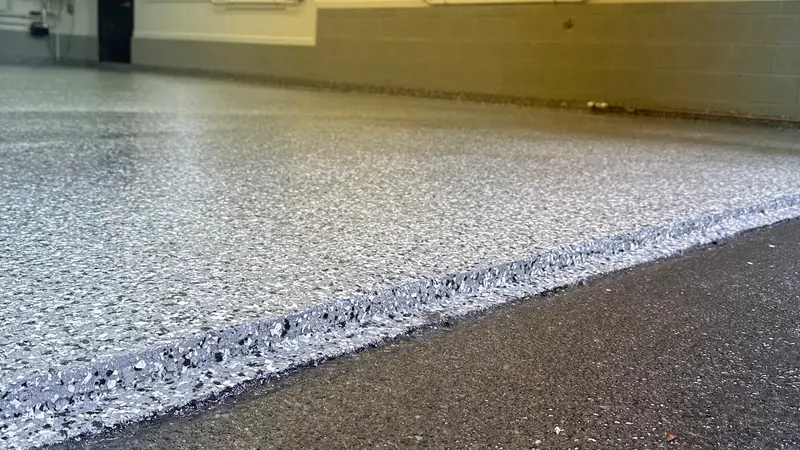
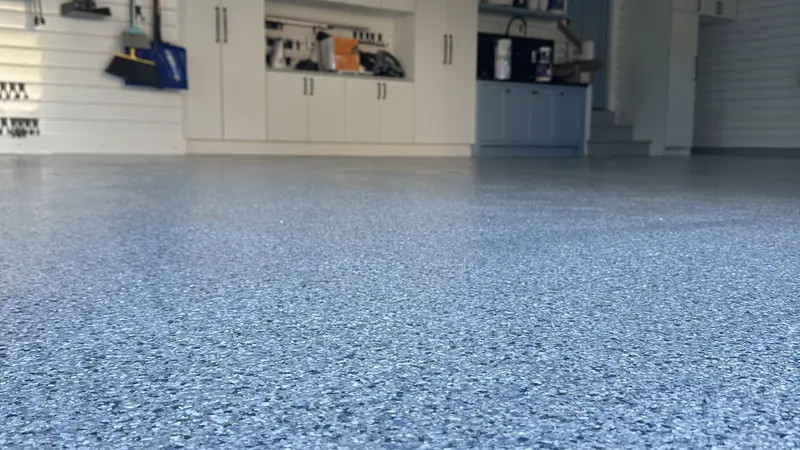
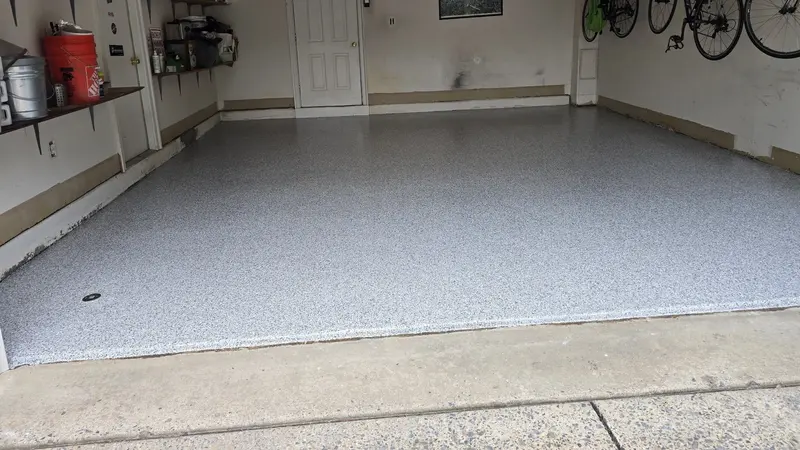
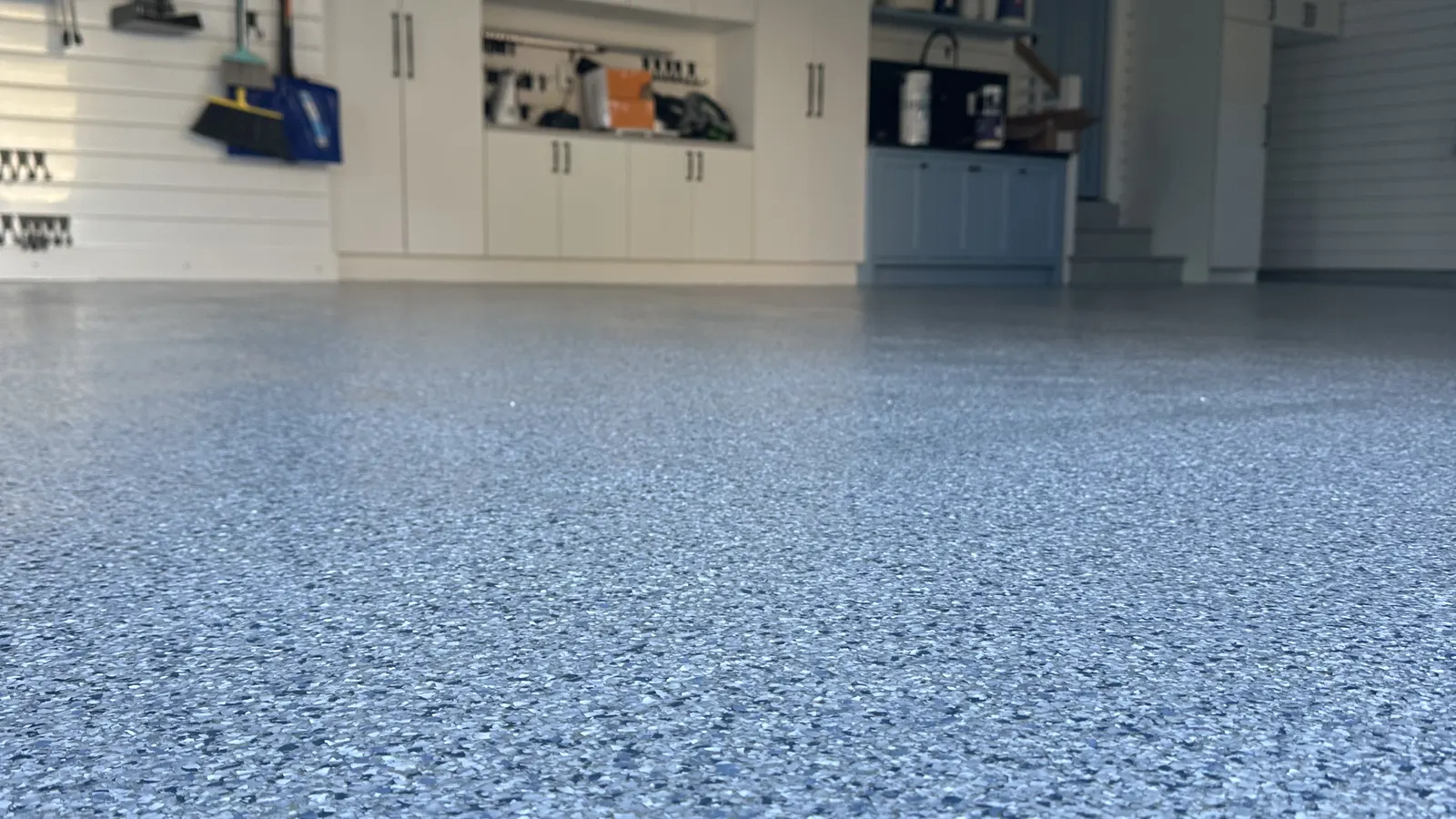
A smooth, high-gloss floor with nothing broadcast into it can be slick when wet. That is why nearly every gym floor we install is a flake system. The vinyl flake is broadcast into the base coat and locked under a clear topcoat, and it leaves a subtle texture underfoot that gives you grip in socks or bare feet.
Color matters more than people expect in a gym. A multi-tone blend hides chalk dust, lint and the gray film that collects around a treadmill. A very dark solid or metallic looks dramatic in photos and shows every speck of chalk. Our three featured blends, Creekbed, Tidal Wave and Gravel, all read as mid-tone and forgiving. If you want to see how they differ side by side, start with our guide to choosing a flake color and then look at the real samples we bring to the estimate.
How does a garage gym hold up through a Northern Virginia year?
In August, a cool slab under humid air will sweat. On bare concrete that means a damp, dusty surface and mats that never quite dry. On a sealed floor the moisture sits on top where a fan or a dehumidifier can carry it off and a towel can wipe it up.
In winter, the bigger issue is usually the car. If your gym shares the garage with a daily driver coming home from the Dulles Greenway or the Beltway, that car brings road salt brine with it. Salt melts onto the slab, concentrates as the water evaporates, and attacks unprotected concrete. A polyaspartic topcoat resists road salt, oil and chemicals, so the half of the garage you train on is not taking damage from the half you park on.
Timing also works in your favor this time of year. Polyaspartic can be installed in temperatures down to 30°F, while epoxy generally needs 50°F or warmer to cure properly, which is one of several reasons homeowners here have moved away from epoxy. An October or November install means the floor is ready before the gym gets heavy winter use.
What should I do before the equipment arrives?
Coat first, build second. It is far easier to clear an empty garage than one with an anchored rack in it, and the floor has to be completely empty on install day.
- Decide roughly where the rack, platform and cardio equipment will live, and check where your outlets are.
- Clear the garage down to the slab before install day, including anything stacked along the walls.
- Plan on a one-day installation: grind the concrete, repair cracks and pitting, base coat, broadcast flake, clear topcoat.
- You can walk on the floor the same day. Give it 24 hours before rolling a vehicle or heavy equipment onto it.
Our step-by-step walkthrough of installation day covers what the grinding and crack repair actually involve. Afterward, upkeep is simple, and keeping a polyaspartic floor clean takes a dust mop and occasional mopping, not a special product.
What does a garage gym floor cost?
| Garage size | Typical range |
|---|---|
| One-car (about 200 sq ft) | $1,500 to $2,000 |
| Two-car (about 400 to 500 sq ft) | $3,500 to $4,000 |
Final price depends on the condition of the concrete and the finish you choose. A chipped, oil-stained slab in an older Vienna or Reston home takes more prep than a five-year-old slab in Ashburn. We break the numbers down further in our Northern Virginia cost guide. For context, a coated floor lasts 15 to 20 years or more and is backed by a lifetime warranty, which is longer than most of the equipment that will sit on it.
Get a firm price before you buy the rack
We will come out for a free 20-minute in-home estimate, look at your slab, bring physical color samples, and give you a firm price. Call or text 703-936-9006 or send us a message and we will get you on the schedule. No pressure. No obligation.
Quick answers
Rubber feet and wheels on cardio equipment will not damage a polyaspartic coating under normal use, though a heavy machine left in one spot for years can leave a faint shadow. A thin equipment mat underneath keeps the floor uniform and makes it easier to slide the machine out for cleaning.
Most homeowners coat the whole floor, because a seam between coated and bare concrete collects dirt and the bare side keeps dusting onto the finished side. If you have a reason to do a partial area, bring it up at the free estimate and we will tell you honestly whether it makes sense for your slab.
Yes. We install the same polyaspartic coating on basement floors, and the zero-VOC formula matters more in a finished basement than it does in a vented garage. Basement slabs have their own moisture considerations, which we go over when we look at the space.