Leesburg has two very different kinds of garage floor, and they need two different conversations. An older slab in town or out toward Purcellville is usually structurally fine but cosmetically rough: oil staining, surface pitting, hairline cracks, maybe a failed coating from a previous owner. A newer slab in River Creek or Lansdowne is clean and flat but often carries a builder's curing compound and a few shrinkage cracks that showed up in the first year. Both can take a polyaspartic coating and last 15 to 20 years. What changes is the prep and the repair work underneath it.
Here is what we look at on each, and why grinding matters more than anything else you will read about coatings.
What makes an older Leesburg slab different?
Concrete poured in the 1970s, 80s or 90s around Leesburg was usually finished by hand with a steel trowel, which closes up the surface and makes it dense and slick. Decades later, that same surface has often started to give up its top layer. You will see it as fine pitting, spalling along the garage door line, and patches where the aggregate is starting to show through.
Older slabs also collect history. Motor oil that soaked in before anyone thought to put cardboard down. Paint. Brake fluid. A thin layer of driveway sealer tracked in on tires. And very often, a previous coating: a big-box epoxy kit rolled on ten years ago that is now peeling in sheets near the door, or a solvent-based sealer that has gone chalky.
None of that rules out a coating. It just means the grinding stage does more work. Diamond grinding takes the surface down past the dense troweled skin and past whatever is sitting on top of it, so the base coat bonds to raw, open concrete instead of to a contaminant. Oil that has penetrated deep gets treated differently than oil sitting on the surface, and that is a judgment call made in person, not over the phone. If you want the long version of why this stage decides everything, we wrote about why garage floor coatings peel and how proper prep prevents it.
What about newer builds in River Creek, Lansdowne or Potomac Station?
Newer garages come with their own list. The slab is typically flatter and smoother, which sounds like an advantage and partly is. But builders frequently spray a curing compound or a cheap sealer on fresh concrete, and that film has to come off completely before any coating goes down. You cannot see most of it. Grinding removes it.
The other thing newer slabs do is crack, and it alarms homeowners more than it should. Concrete shrinks as it cures. Shrinkage cracks show up in the first year or two, usually thin and running from a control joint or a corner. On a two-car garage in a newer Leesburg neighborhood, one or two of those is normal. They get chased out and filled before the base coat, and once flake and topcoat go over them, they disappear.
If the concrete is genuinely new, it needs time. Fresh concrete typically wants around 28 days before anything gets coated over it, because it is still releasing moisture. If your garage was poured last month, that is worth mentioning when you call.
Does Leesburg weather actually affect a garage floor?
Yes, and the damage is concentrated in a strip about three feet inside the door. That is where snow and slush drop off your tires and sit.
Loudoun County winters give us repeated freeze-thaw cycling rather than one long deep freeze. Water works into the pores of bare concrete, freezes, expands, and pops a little off the surface. Do that twenty times a winter for fifteen years and you get the pitted, flaking apron that almost every older Leesburg garage has. Add the road salt and brine that VDOT puts down on Route 7 and Route 15, which your car carries straight home and drips onto the slab, and the process speeds up. Salt is hard on concrete and harder on rebar.
Summers here do the opposite kind of work. Humidity plus a slab sitting on Loudoun clay means moisture moves up through the concrete from below. Bare concrete handles that fine. Some coatings do not, which is one reason the dense, flexible polyaspartic system we install behaves better here than a rigid film. It also resists hot tire pickup, which matters when a car pulls into a closed garage in August after sitting on blacktop.
How do cracks and pitting get handled before coating?
In order, a one-day install on either type of slab looks like this:
- Diamond grind the entire floor to bare, open concrete, including edges and corners.
- Repair cracks, pits, spalled areas and the chipped edge along the garage door.
- Roll the pigmented base coat.
- Broadcast vinyl flake into the wet base coat by hand.
- Scrape and apply the clear polyaspartic topcoat.
You can walk on the floor the same day. Wait 24 hours before you park a vehicle on it. The garage has to be completely cleared before we arrive, which for most people is the real project. There is a fuller step-by-step walkthrough of installation day if you want to know what the noise and dust look like.
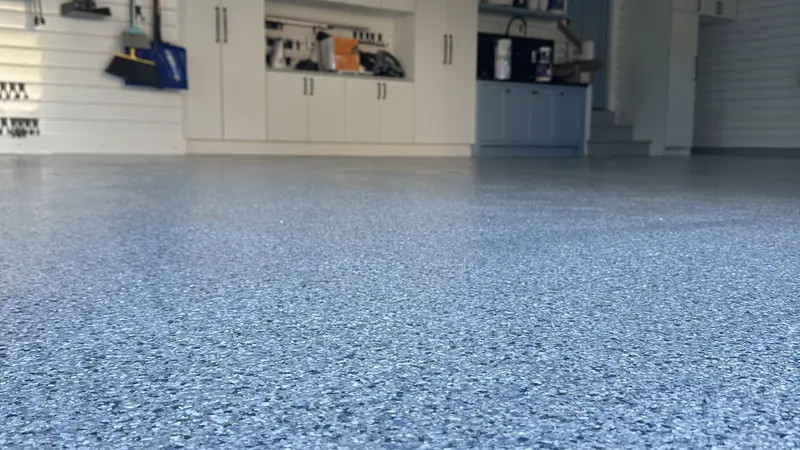
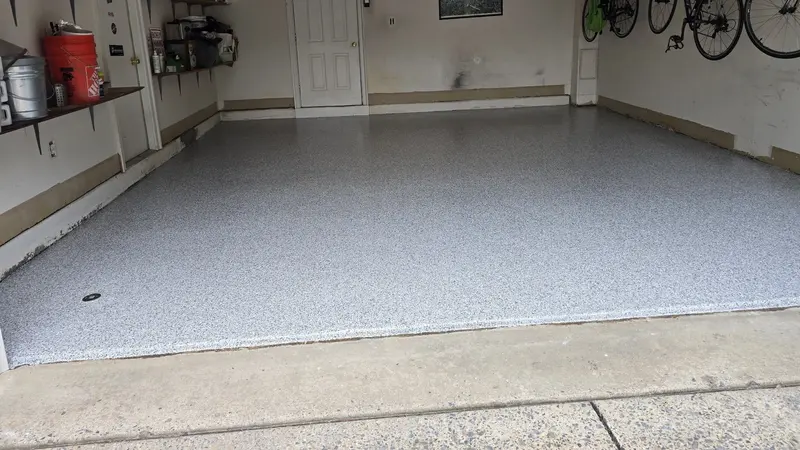
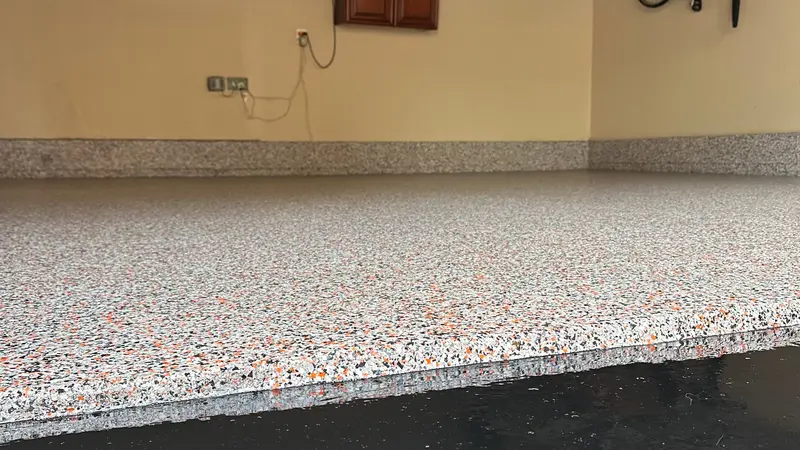
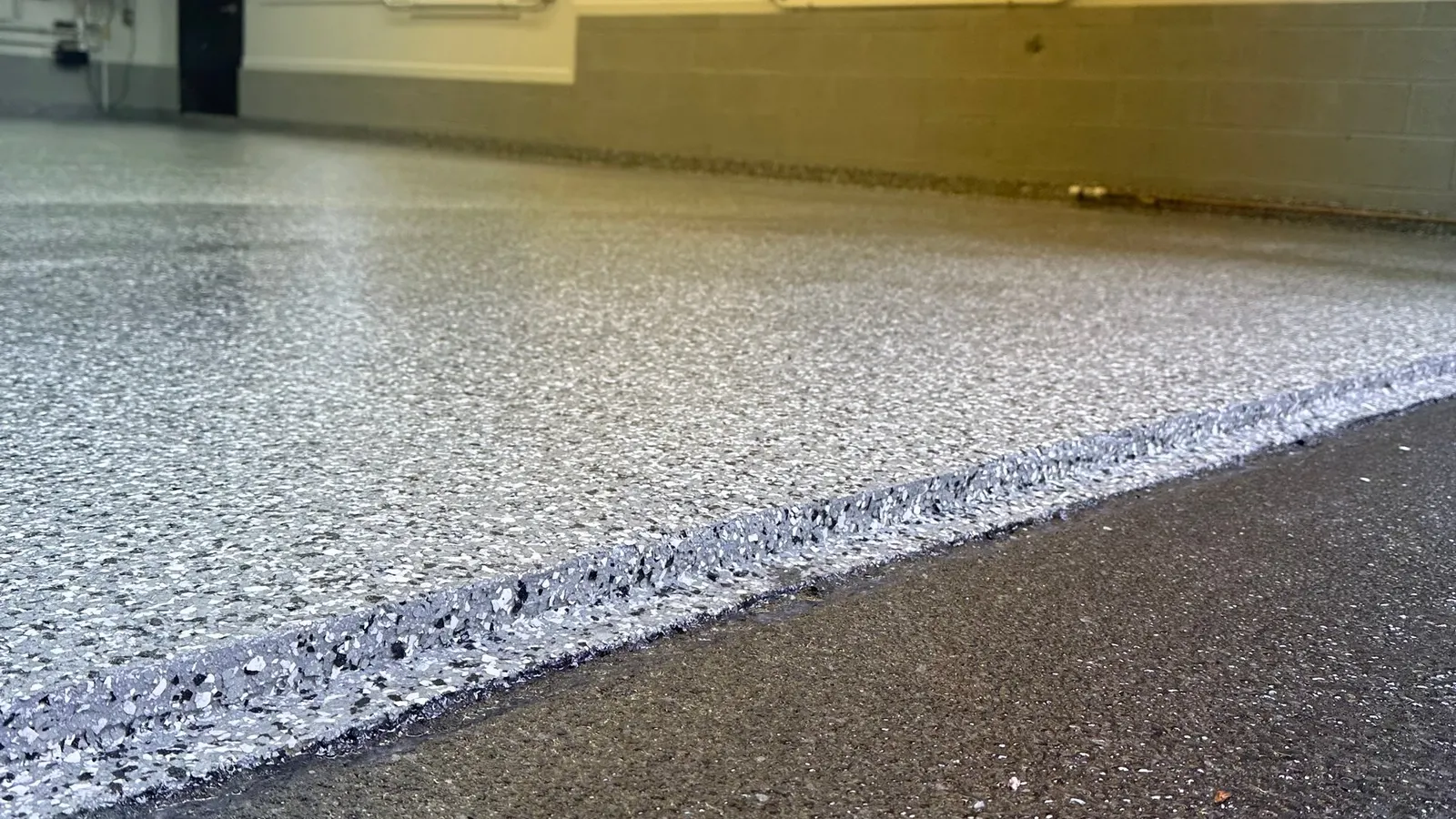
One note on rough slabs: repairs make a floor sound and smooth, not brand new. A slab with heavy spalling will still read as an older slab if you get down on your knees and look for it. Flake blends hide an enormous amount, which is part of why they are the most popular finish. The texture and color variation break up the eye. Our flake color options cover the range, and we bring physical samples so you can set them on your own concrete in your own light.
Does slab condition change the price?
It is one of the two things that moves the number, along with the finish you choose. Our pricing:
| Garage size | Approximate area | Price range |
|---|---|---|
| One-car | About 200 sq ft | $1,500 to $2,000 |
| Two-car | About 400 to 500 sq ft | $3,500 to $4,000 |
A clean newer slab in a Leesburg townhome sits toward the lower end of its range. A 1980s single-family garage with a failed coating, deep oil staining and a crumbling door edge sits higher, because there is more grinding and more repair material involved. You get a firm price at the estimate, not a range. More detail on what drives cost is in our Northern Virginia cost guide.
Is fall a good time to do this in Leesburg?
It is arguably the best time. The floor gets coated before the first salted commute of the season, so the winter's slush lands on a sealed, chemical-resistant surface instead of open concrete. And polyaspartic installs in temperatures down to 30°F, where epoxy generally needs 50°F or warmer to cure properly. That extends the working season here well past the point where an epoxy job stops making sense. We covered the seasonal logic in more depth in why fall is the best time to coat a garage floor in Northern Virginia.
We are based in Leesburg, so we are working in these neighborhoods constantly and we know what the slabs look like in most of them. More on our Leesburg garage floor coating service, and if you are comparing notes with friends one town over, the Ashburn post covers similar ground for Brambleton and Broadlands.
Get a firm price on your floor
The only way to know what your slab needs is to stand on it. The estimate is free, takes about 20 minutes, and you get physical color samples and a firm price before we leave. Call or text 703-936-9006 or reach out through our contact page. No pressure. No obligation.
Quick answers
Yes. The old coating comes off during diamond grinding so the new base coat bonds to bare concrete. A floor with a failed previous coating takes more grinding time, which is factored into the firm price you get at the estimate.
Most cracks are cosmetic shrinkage cracks and get repaired before the base coat goes down. A crack with significant height difference between the two sides, or one that keeps moving, is worth looking at in person before anyone quotes a coating.
Yes, the floor has to be completely cleared before we start, including shelving legs, fridges and anything mounted to the slab. Most homeowners move things to the driveway for the day or stage them in the yard.